All Categories
Featured
Table of Contents
It serves as a direct and unvarnished indicator of procedure quality and resourcefulness. represents lost time and labor spent repairing mistakes. represents squandered products and sunk costs. frequently involve additional parts and specialized labor. The FPY computation is uncomplicated: (Number of systems completed correctly on the first pass)/ (Total variety of units getting in the process).
Business like Intel, which preserve FPY above 99% in complicated semiconductor production, show the power of this metric in achieving remarkable quality and expense control. Executing FPY starts with clearly specifying what makes up a "flaw" at each crucial phase of your workflow. This is not limited to production; for a law practice, a flaw might be a contract with mistakes requiring revision.
Measure the yield at each individual step of the process. This produces a "Rolled Throughput Yield" (RTY) that offers a more accurate photo of end-to-end procedure health and identifies the precise stages where defects are most often introduced.
A dip in FPY at a specific phase, like tablet covering or product packaging, immediately triggers an origin analysis to avoid defective items from ever reaching the market. By concentrating on FPY, you shift your team's mindset from just fixing problems to preventing them from happening in the very first place.
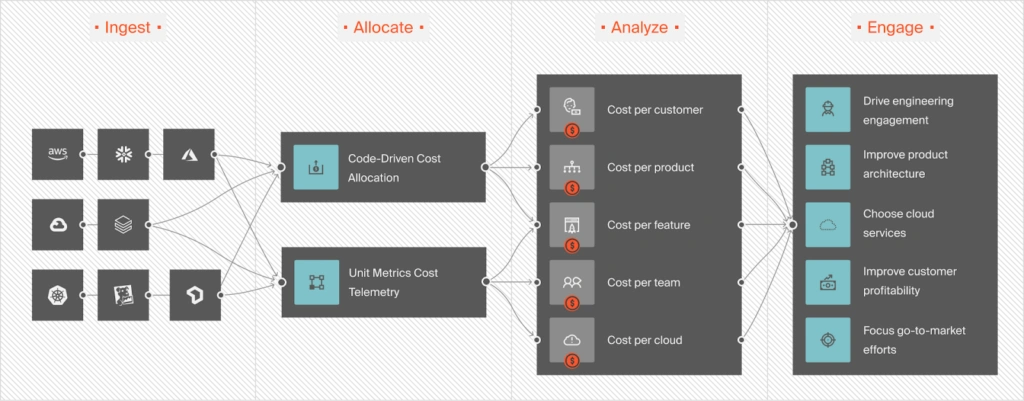
Implementing Enterprise Expenditure Frameworks
Labor Performance is a fundamental operational efficiency metric that measures the real output created per system of labor input. It measures how successfully a business transforms work hours into important products or services, typically revealed as output per employee or output per hour. This metric is a foundation for assessing organizational health, comparing efficiency in time, and benchmarking versus market leaders.
is the overall hours worked or the variety of workers required to create that output. is the ratio of Output to Labor Input, offering a clear indication of personnel usage. The core principle, promoted by management thinkers like Frederick Taylor and Peter Drucker, is that systematically improving how work is done directly increases value creation.
Legacy Vs Modern Cost Governance TacticsThis is one of the most direct for service-based companies, consisting of accounting, legal, and not-for-profit companies. Start by specifying a clear and consistent system of output for a specific team or function. For an accounting company, this might be "income tax return submitted per accountant each month." For a law practice, it might be "billable hours per paralegal." Consistency is crucial to tracking patterns properly.
Legacy Vs Modern Cost Governance TacticsStructuring Digital Asset Management Frameworks
Always set labor productivity with a quality metric. Track "client cases dealt with per agent" alongside "customer fulfillment scores (CSAT)" to ensure effectiveness gains do not come at the cost of service quality. For instance, UPS notoriously enhanced chauffeur productivity by over 12% utilizing its route optimization software application (ORION) and automobile telematics.
Likewise, many accounting firms now take advantage of cloud-based platforms to automate information entry, releasing up experts to handle more high-value customer advisory tasks and hence increasing their overall productivity. By determining and evaluating labor productivity, companies can recognize opportunities to improve company efficiency through much better processes, targeted training, or strategic innovation adoption.
The Property Utilization Rate is a basic metric that measures how effectively an organization leverages its assets to produce income or value. This key efficiency indicator is one of the most direct, assessing the percentage of time a property is actively contributing versus its overall potential capability. It applies to whatever from physical equipment and server racks to software licenses, revealing whether capital expense are delivering their expected return.
Achieving Peak Cloud Efficiency for 2026
In cloud environments, it tracks the utilization of server CPU, memory, or storage versus provisioned capacity. In service industries, it can measure billable hours versus total paid hours for experts or attorneys. The rate is determined by dividing actual usage by the optimal prospective use (Real Output/ Optimum Prospective Output).
Netflix notoriously re-architected its systems to attain over 90% server utilization, dramatically decreasing waste in its enormous cloud facilities through predictive auto-scaling. Begin by cataloging your most substantial capital properties, both physical and digital. For a small business, this might be a single delivery vehicle or its main application server.
Pushing possessions to their outright limitation without breaks often leads to premature failure and more pricey, unexpected failures. Southwest Airlines offers a traditional example, consistently keeping over 11 flight hours per aircraft daily, well above the market average of 8-9 hours.

Latest Posts
Impact of Automated Governance On 2026 Cloud Budgets
How to Refine IT Spending in 2026
Why Does IT Governance Drive 2026 ROI?